

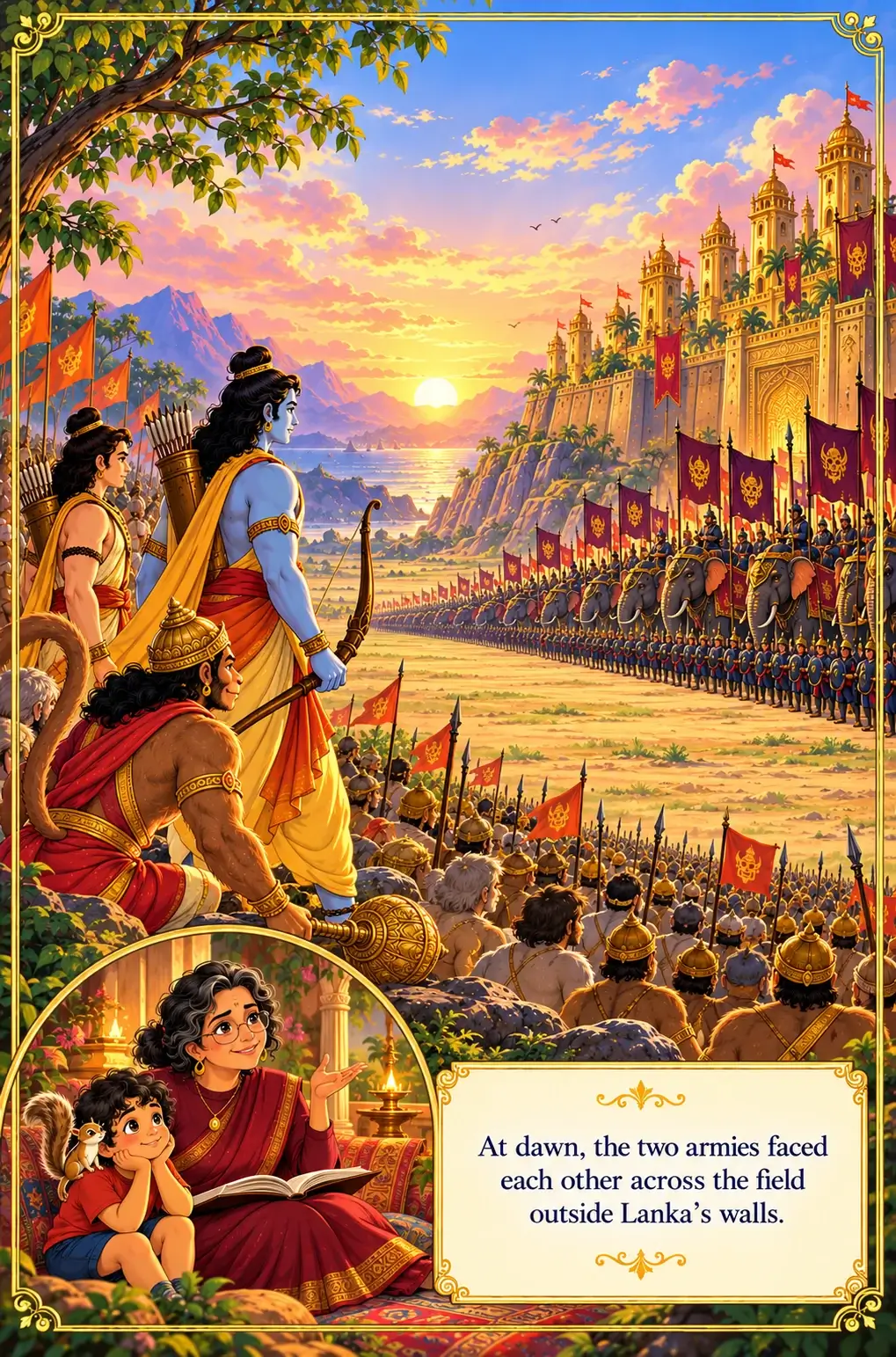
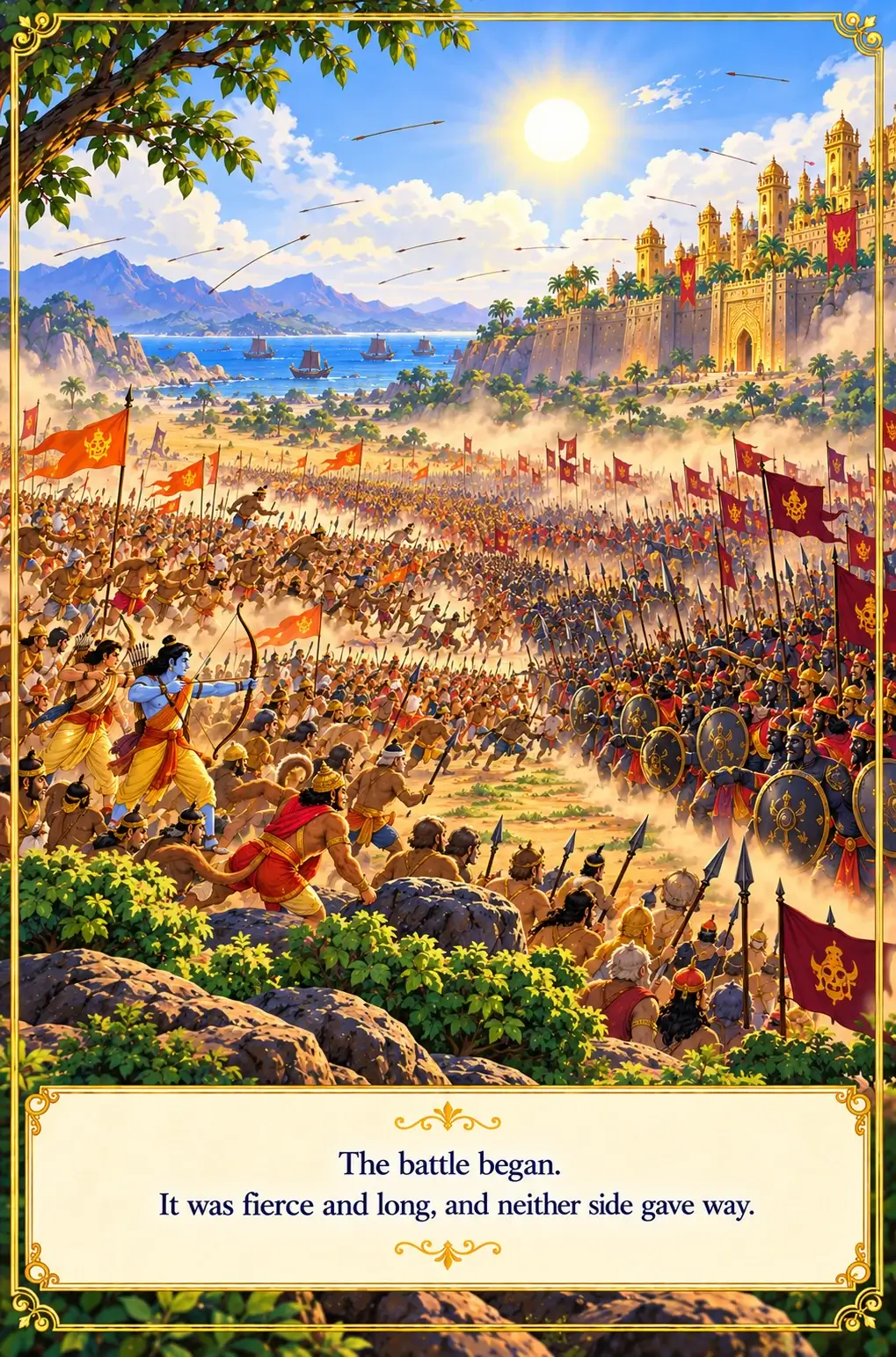
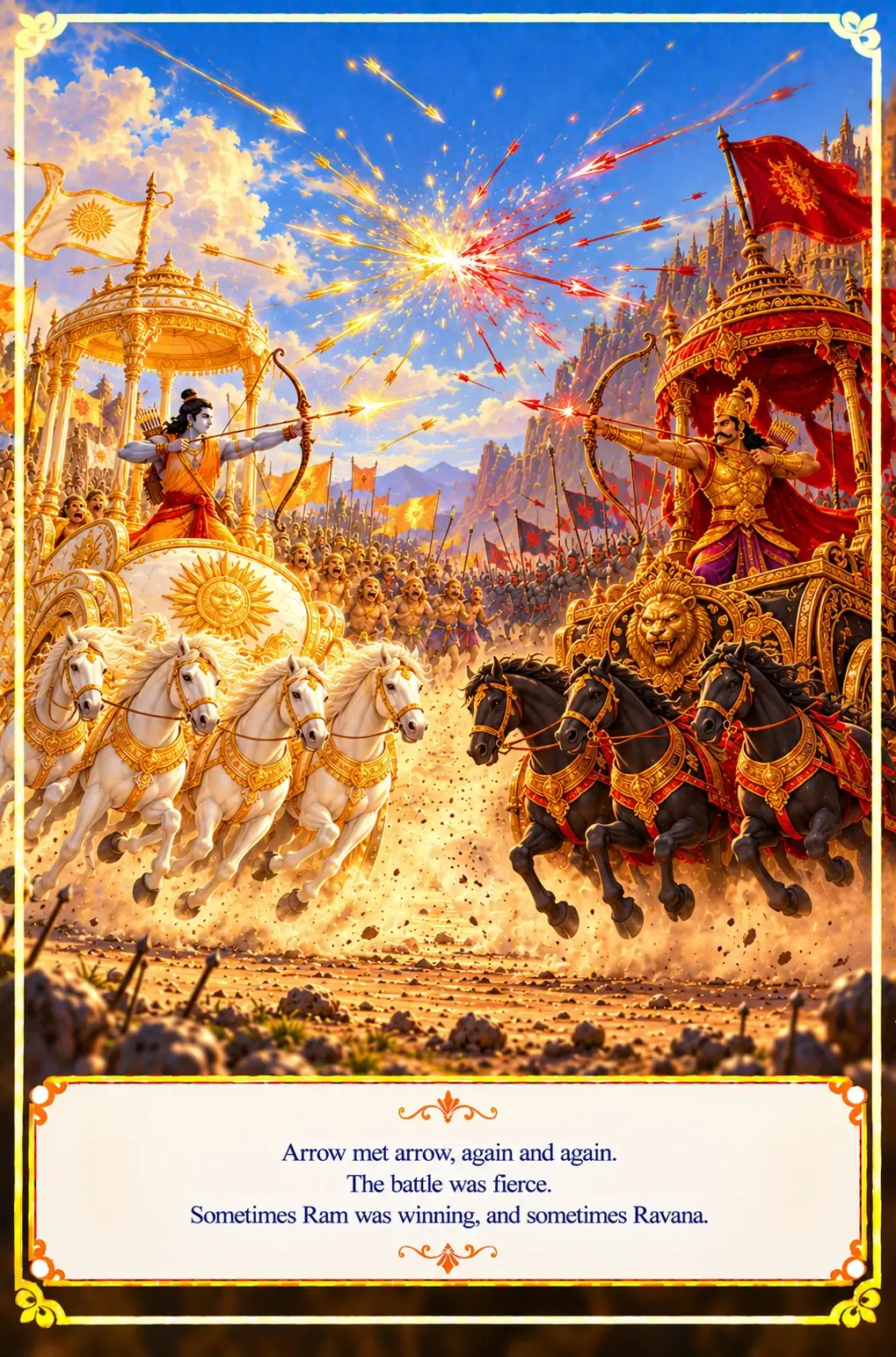
Welcome back to Lanka. In Ram Book 11, The Battle for Sita, the long war finally begins. Two armies meet at dawn outside the golden walls of Lanka. A sleeping giant is woken from his six-month nap. A brother chooses loyalty over what he knows is right. Lakshman falls, and Hanuman races the sunrise to carry an entire mountain back through the sky. This is the Ramayan for kids, retold by Nani with all the wonder and none of the fear.
Table of Contents
In this post
Tap the picture below to begin. Swipe left or use the arrows to turn the pages. Enjoy!

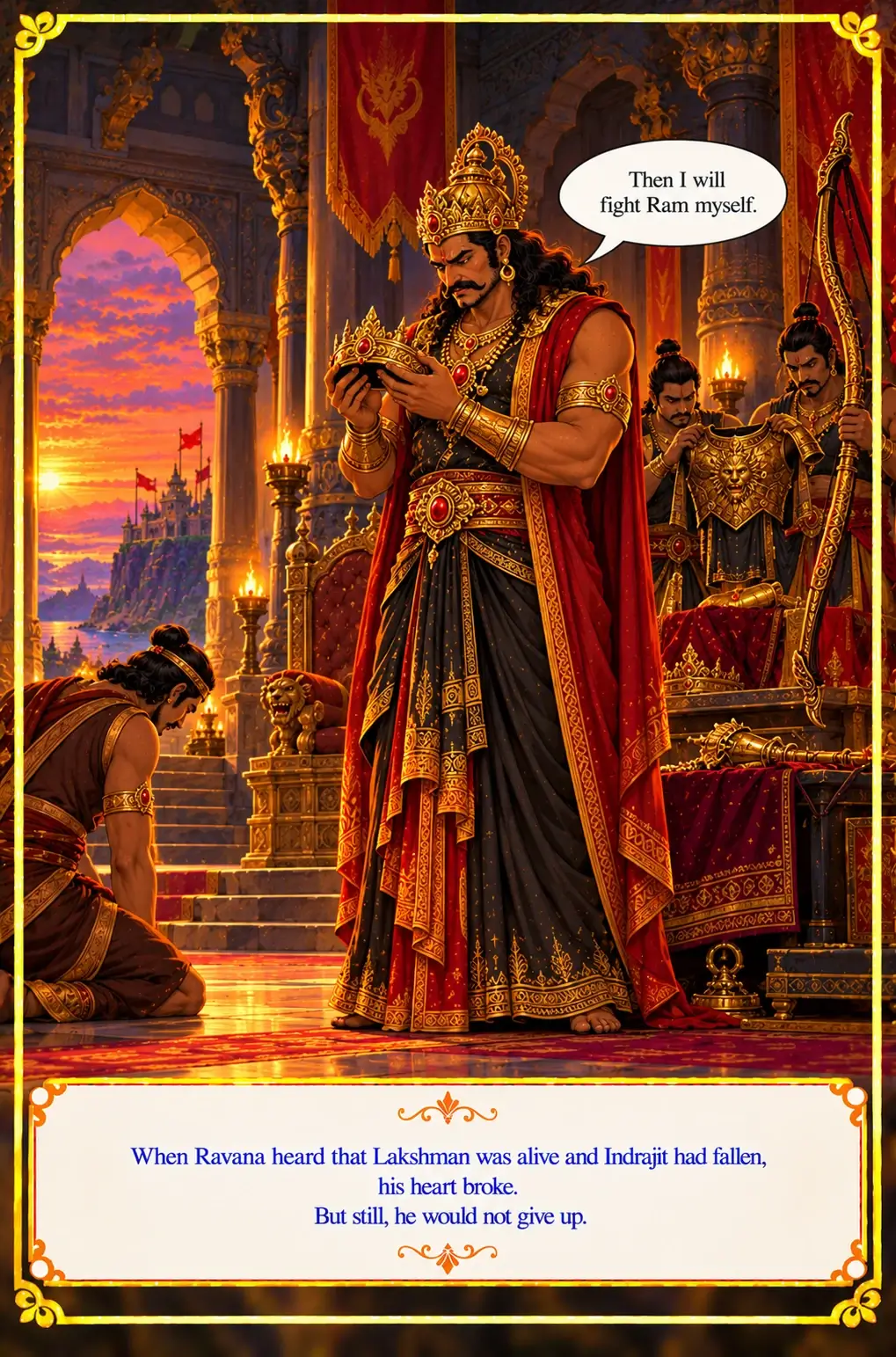
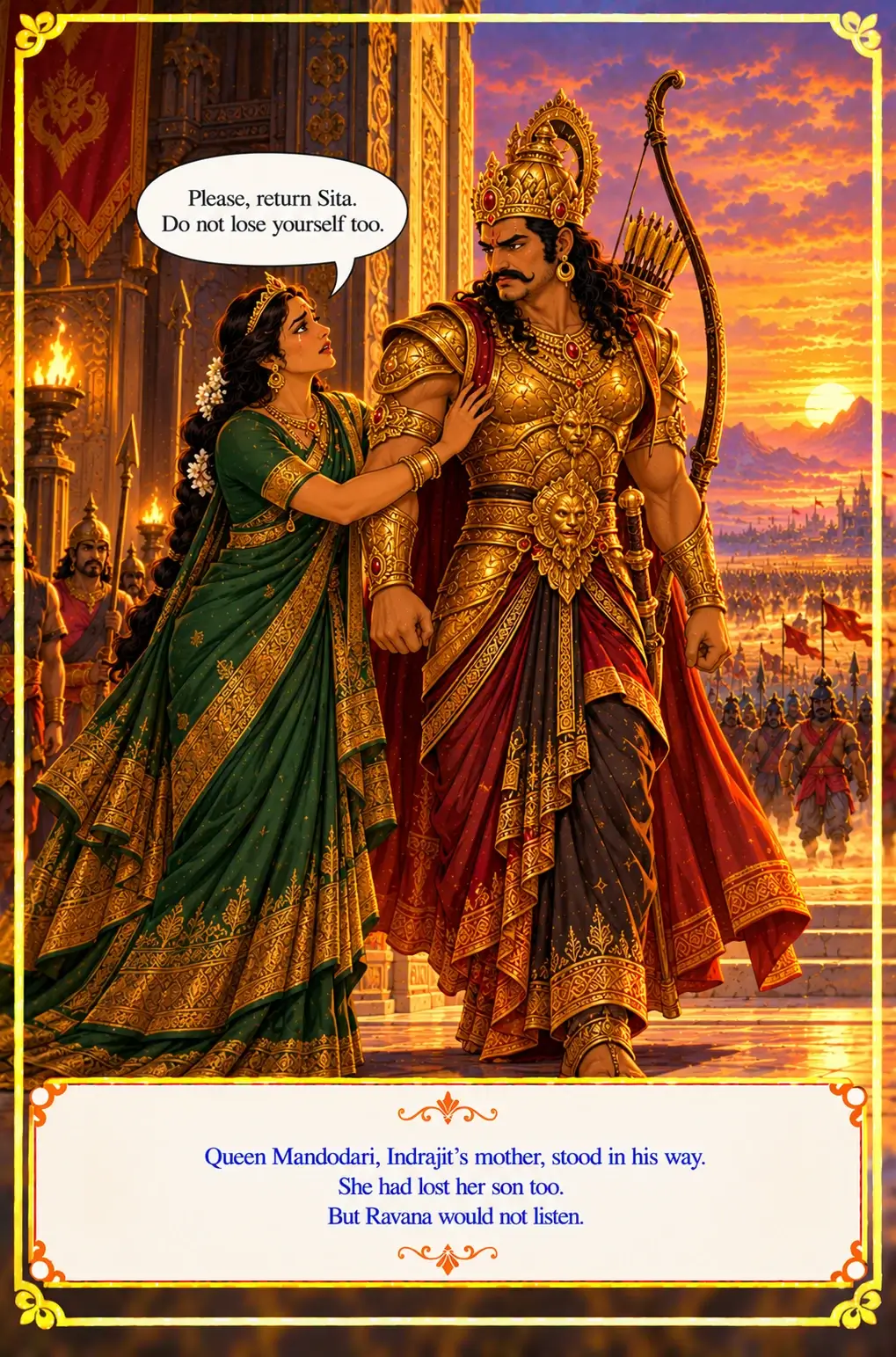
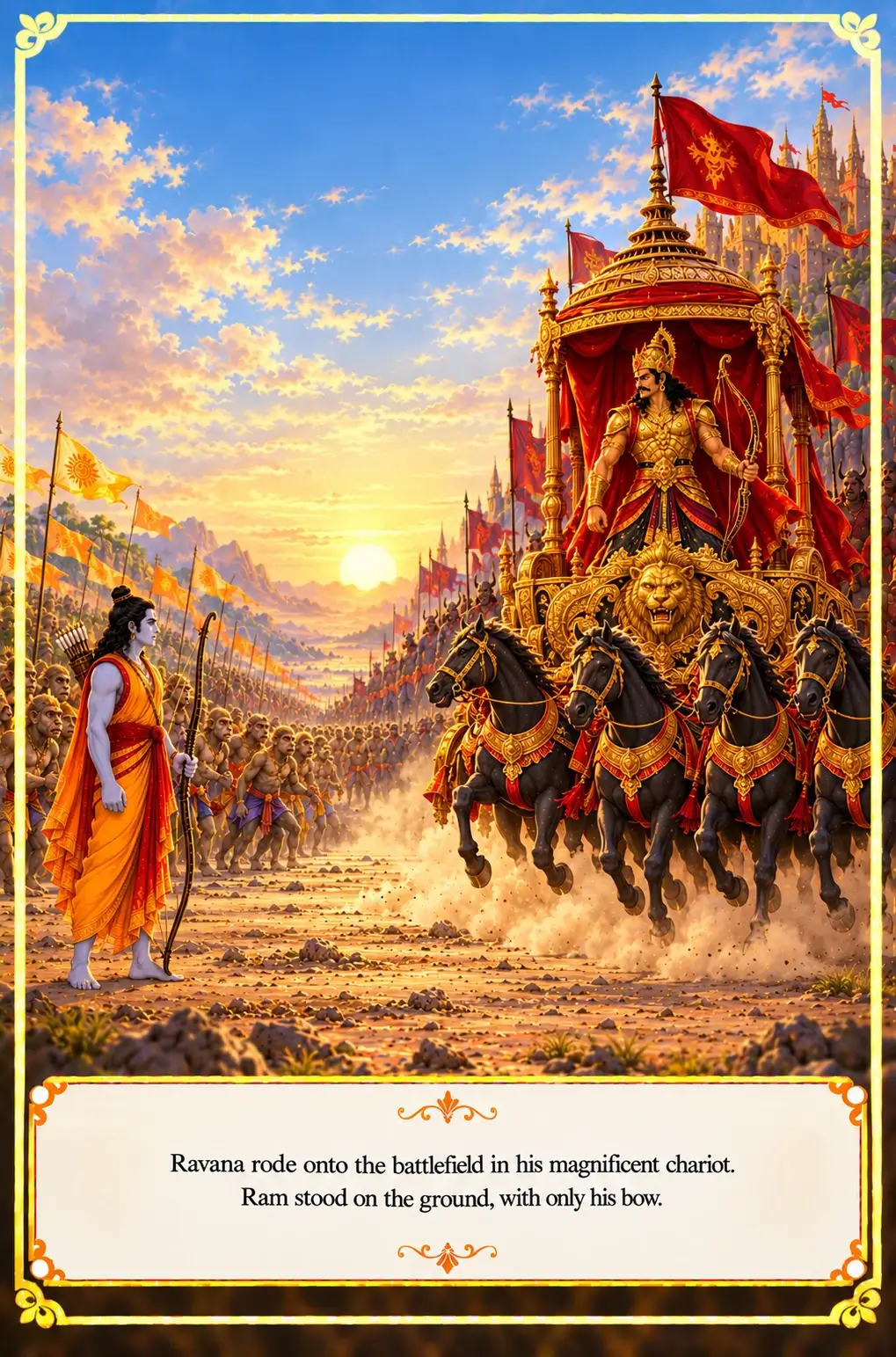
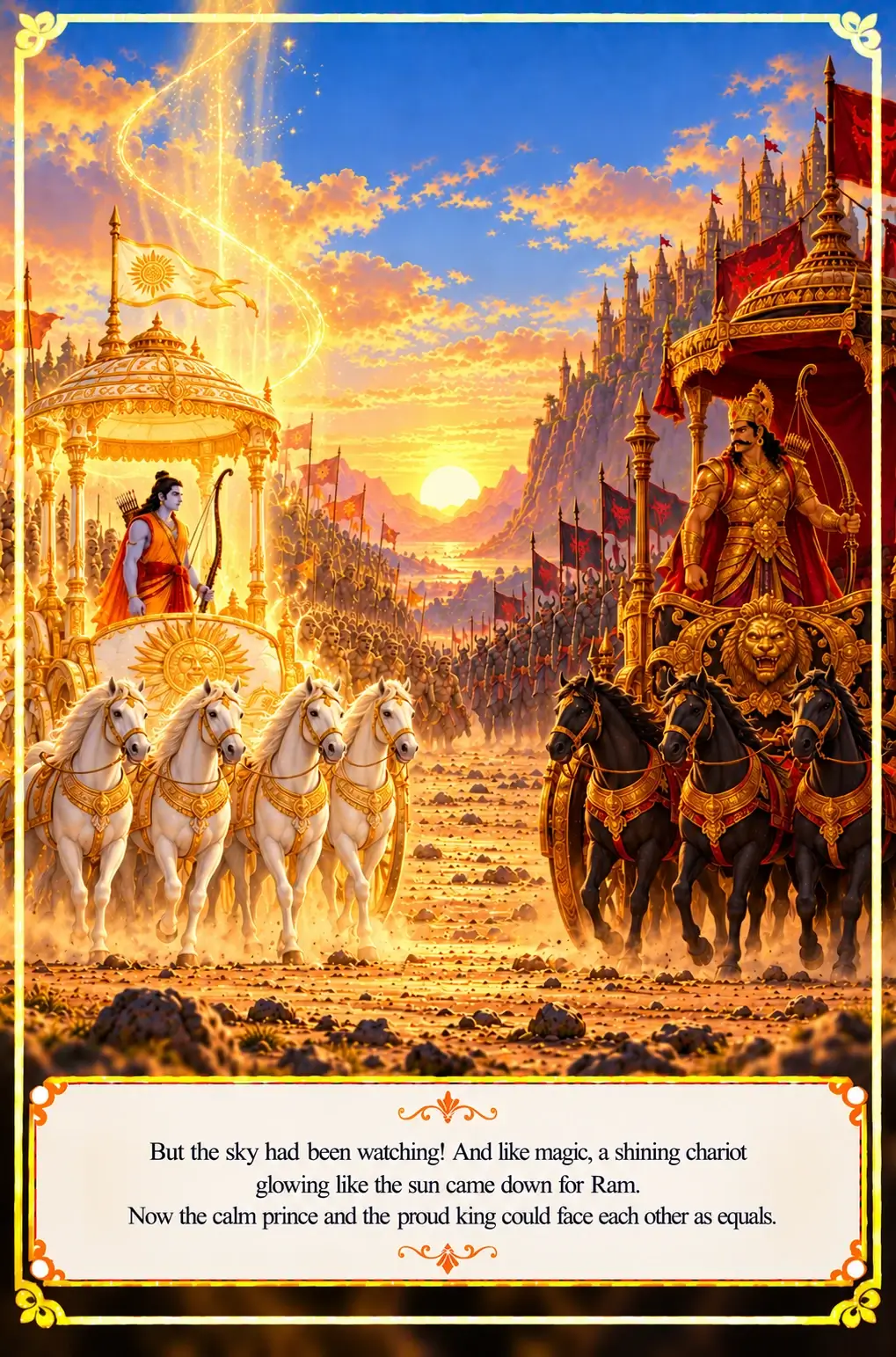


If you and your little one enjoyed this story, click the heart button below.
The Battle for Sita: Discussion Questions and Activities (Book 11)
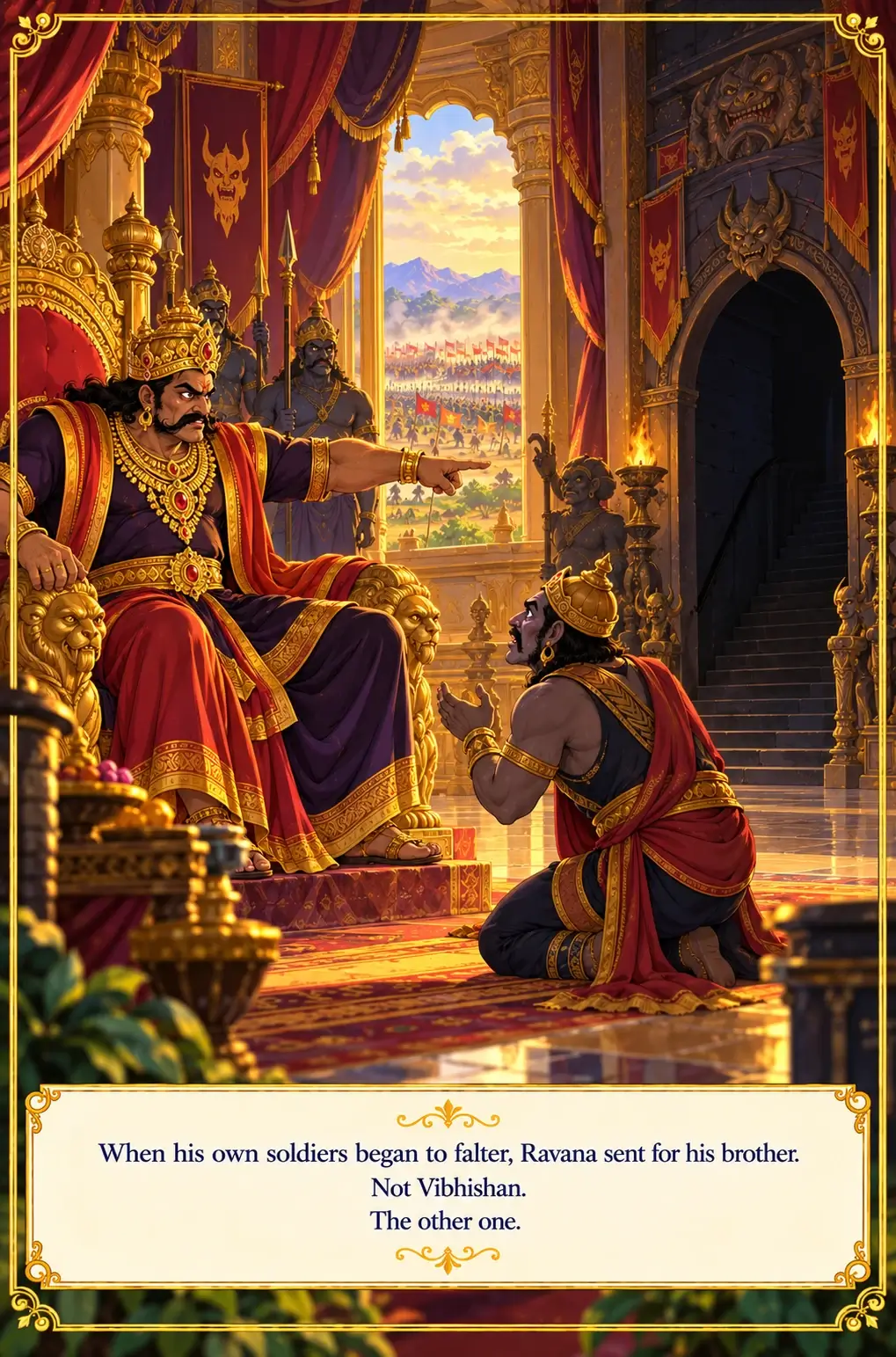
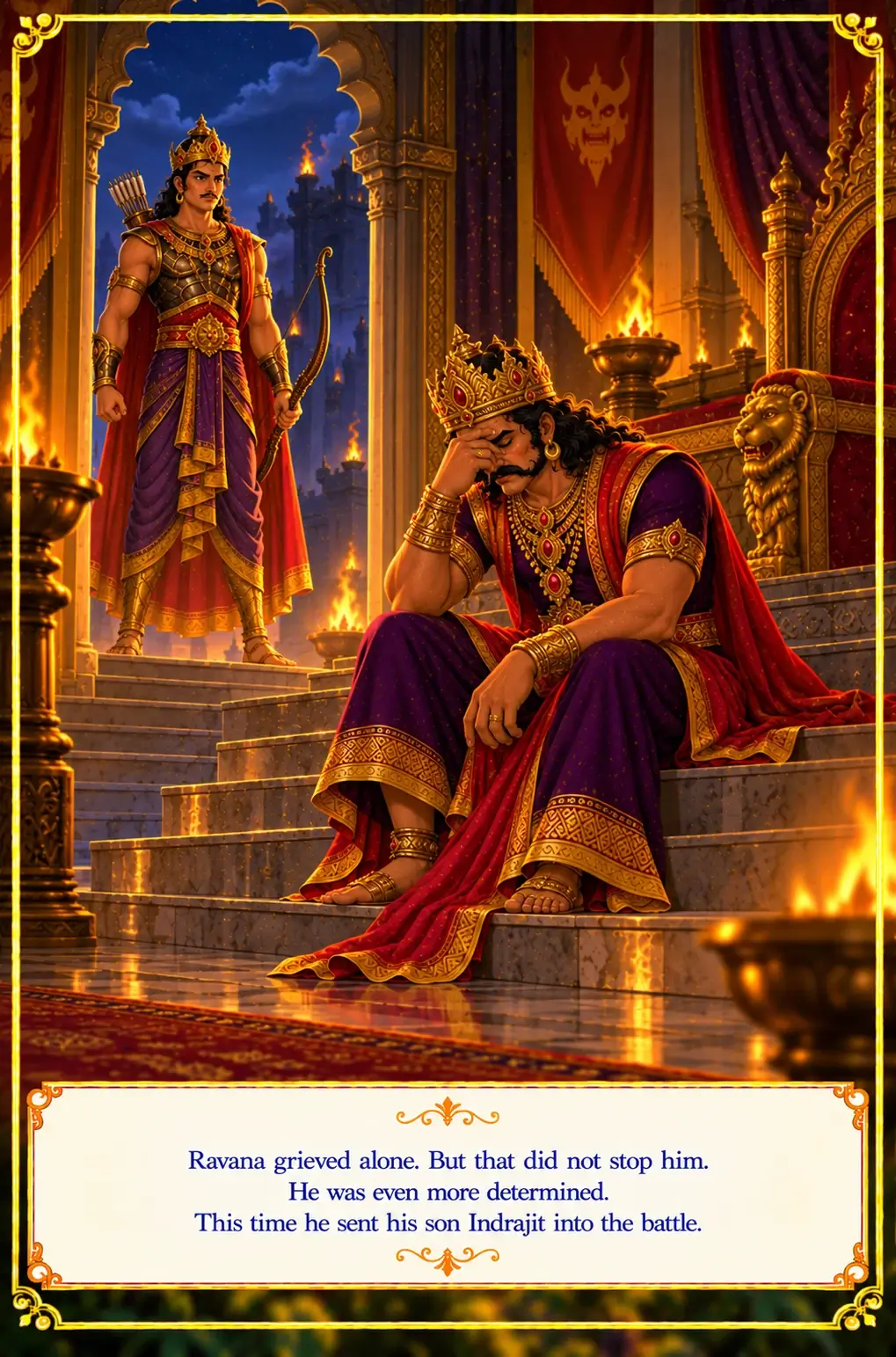
The heart of the story. The Battle for Sita looks like a book about a war, but it is really a book about choices. Every important character in it stands at a crossroads. Ravana is told three times, by three people who love him, that he is wrong. His brother Kumbhakarna tells him. His queen Mandodari begs him. And back in Book 10, his brother Vibhishan warned him too. Each time, Ravana could stop. Each time, he refuses. Children do not need this spelled out. They feel it, page by page, and that feeling is where the real learning happens.
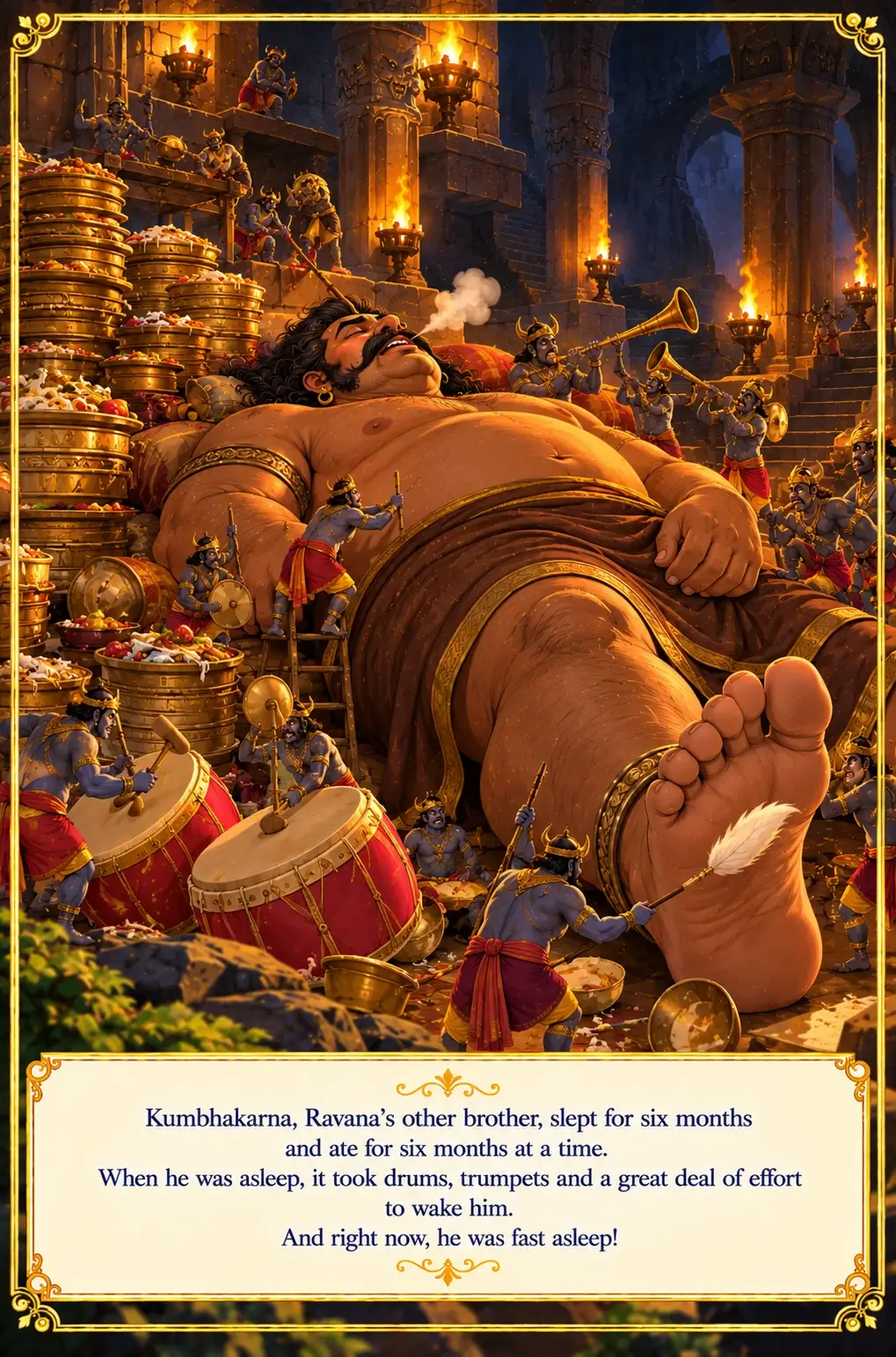
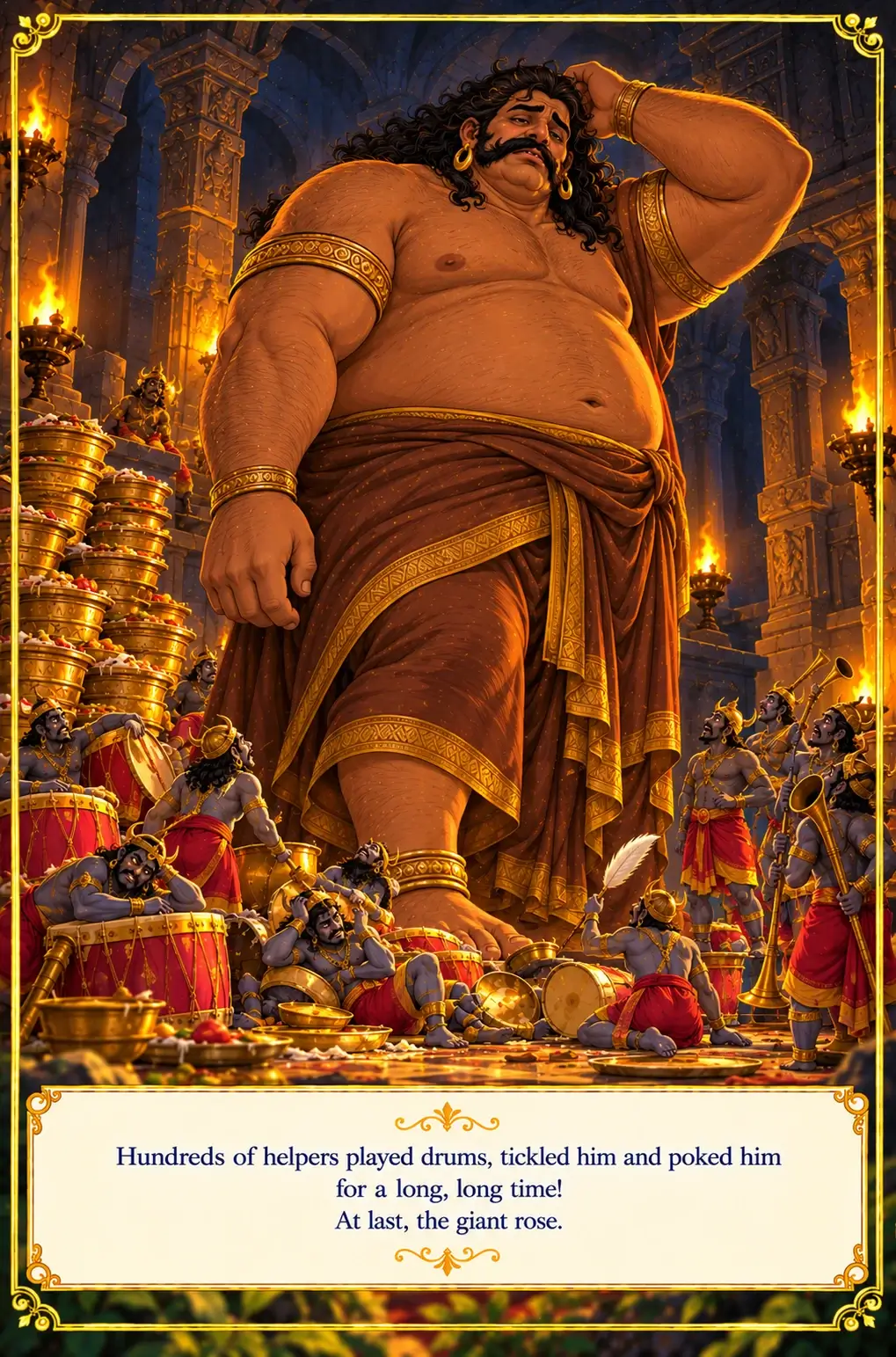
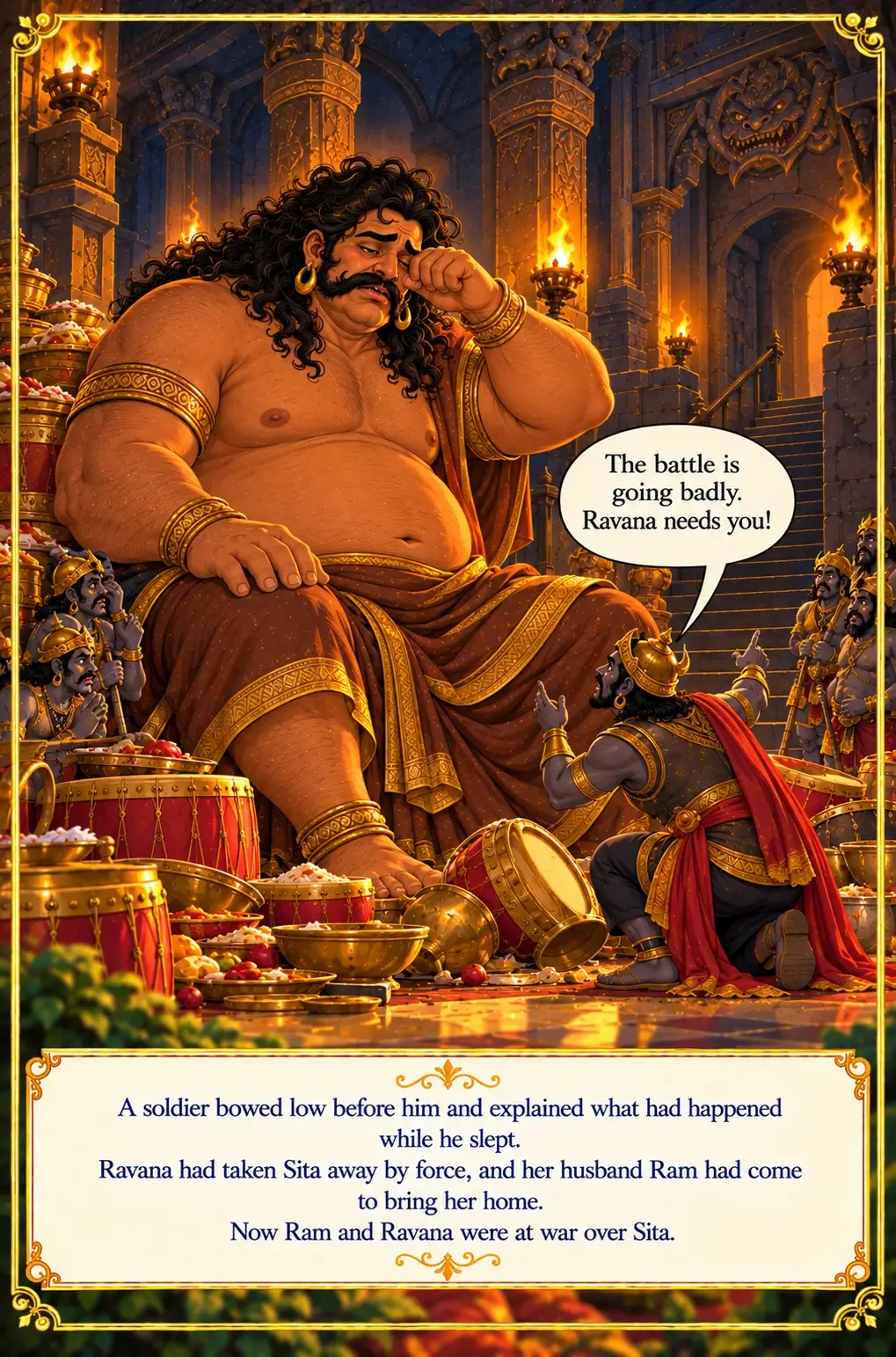
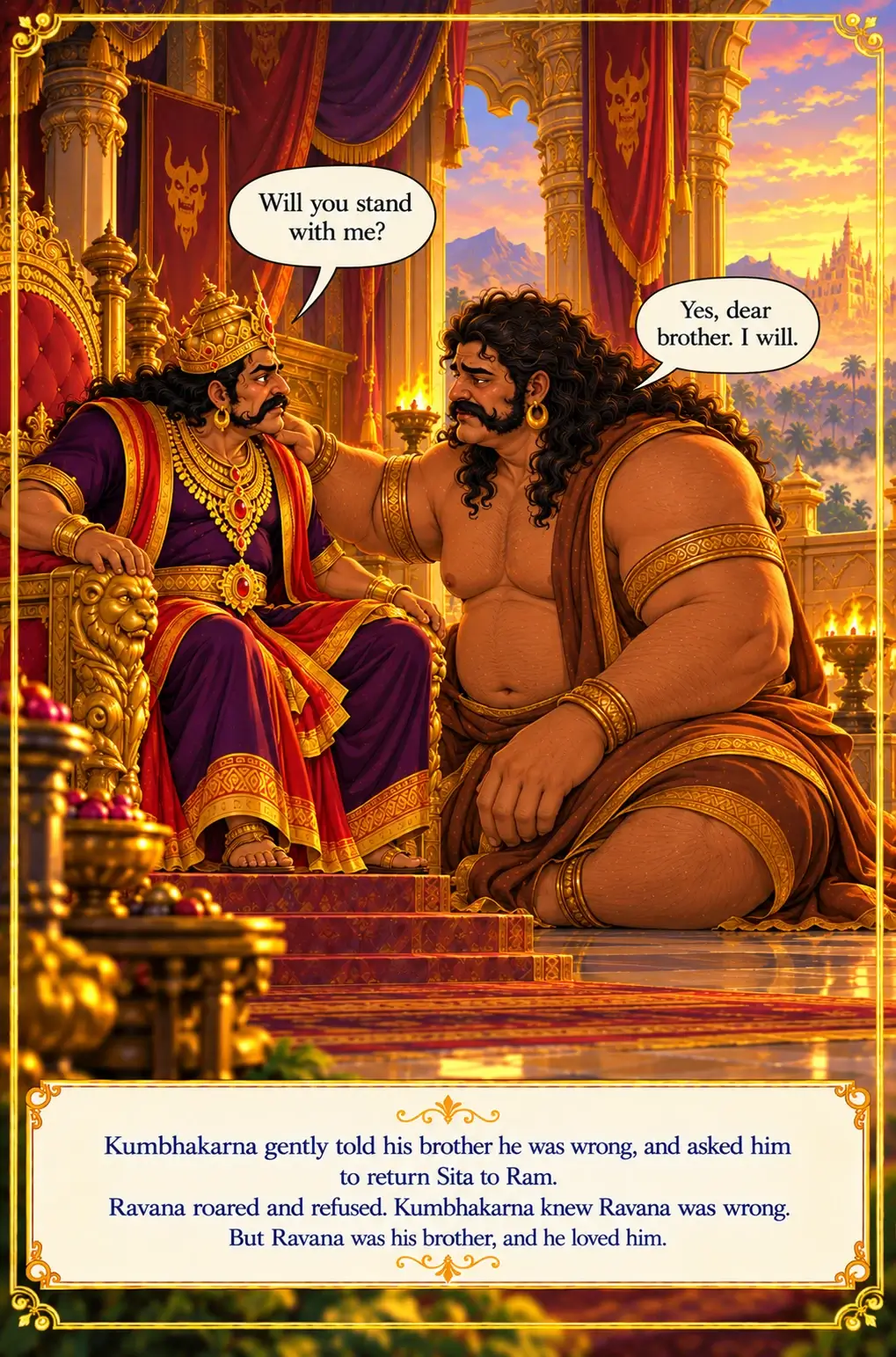
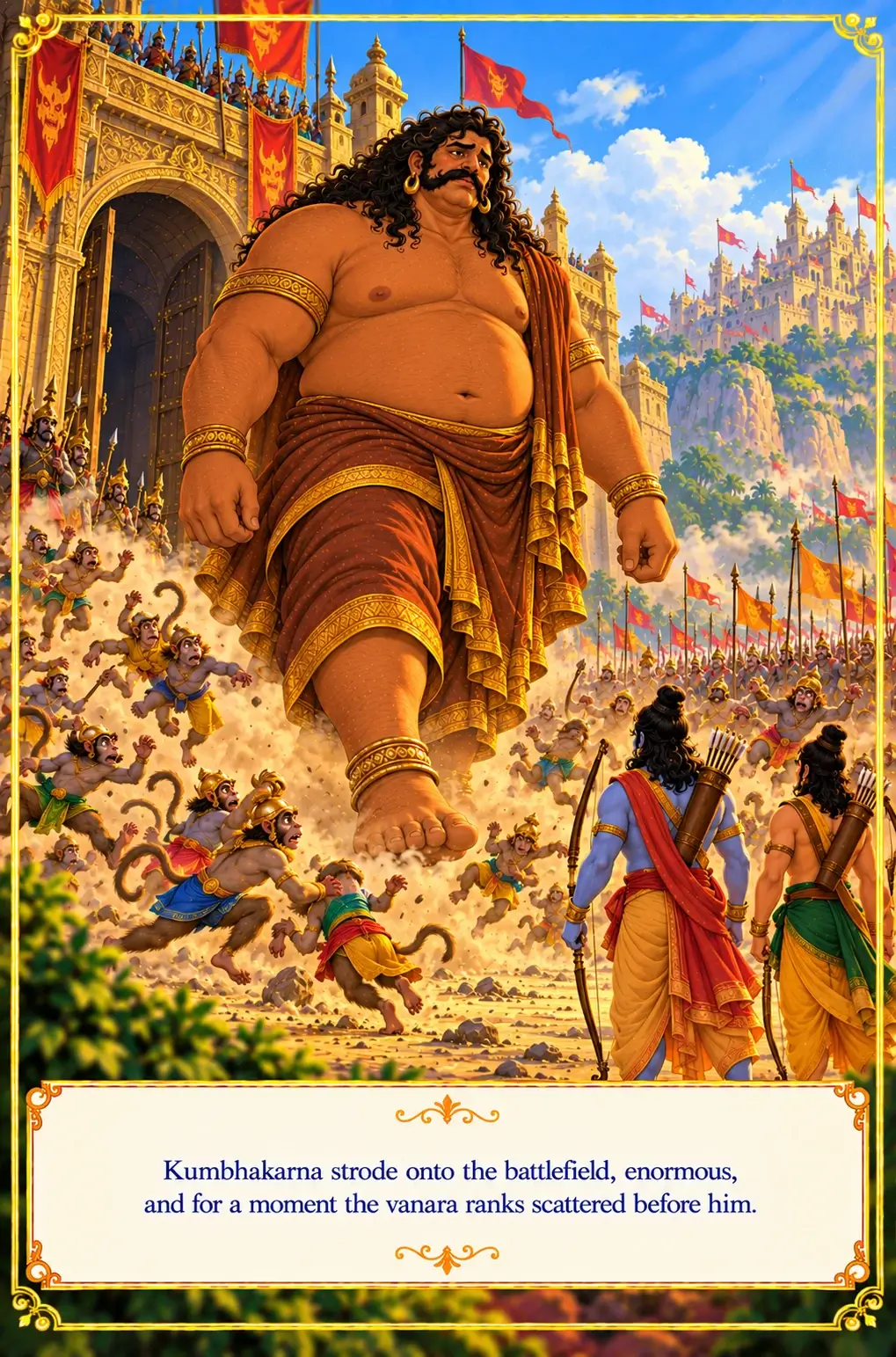
Loyalty and doing what is right. Kumbhakarna is one of the most interesting characters in the whole Ramayan, and children often love him. He is huge, he sleeps for six months and eats for six months, and it takes drums, trumpets and a great deal of tickling to wake him. But when he finally stands before Ravana, he tells the truth: “You were wrong to take Sita.” And then he stands with his brother anyway. Kumbhakarna and Vibhishan heard the same truth and made opposite choices. Nani does not tell children who was right. She lets them sit with it, and that is often where the best conversations begin.
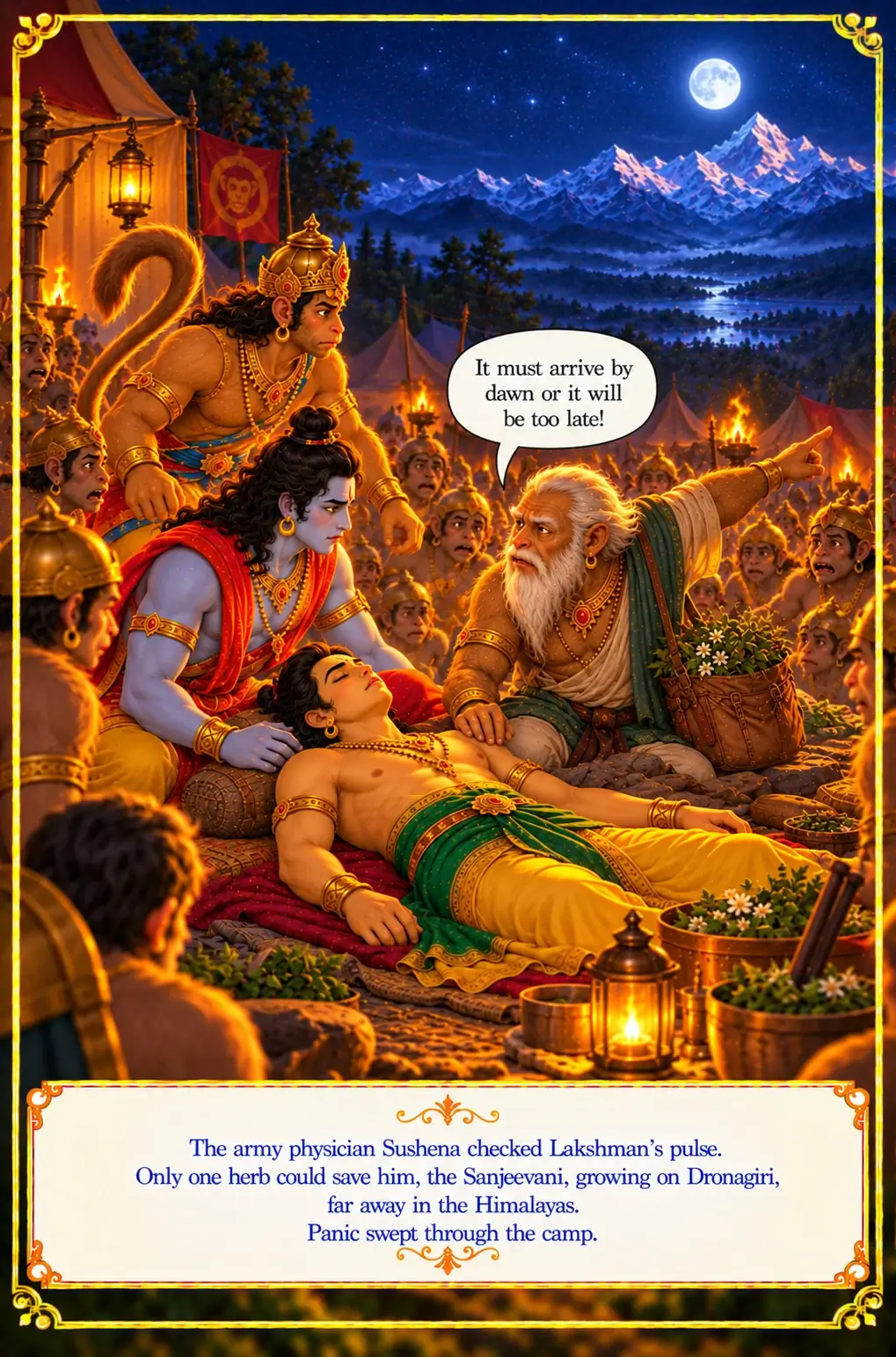
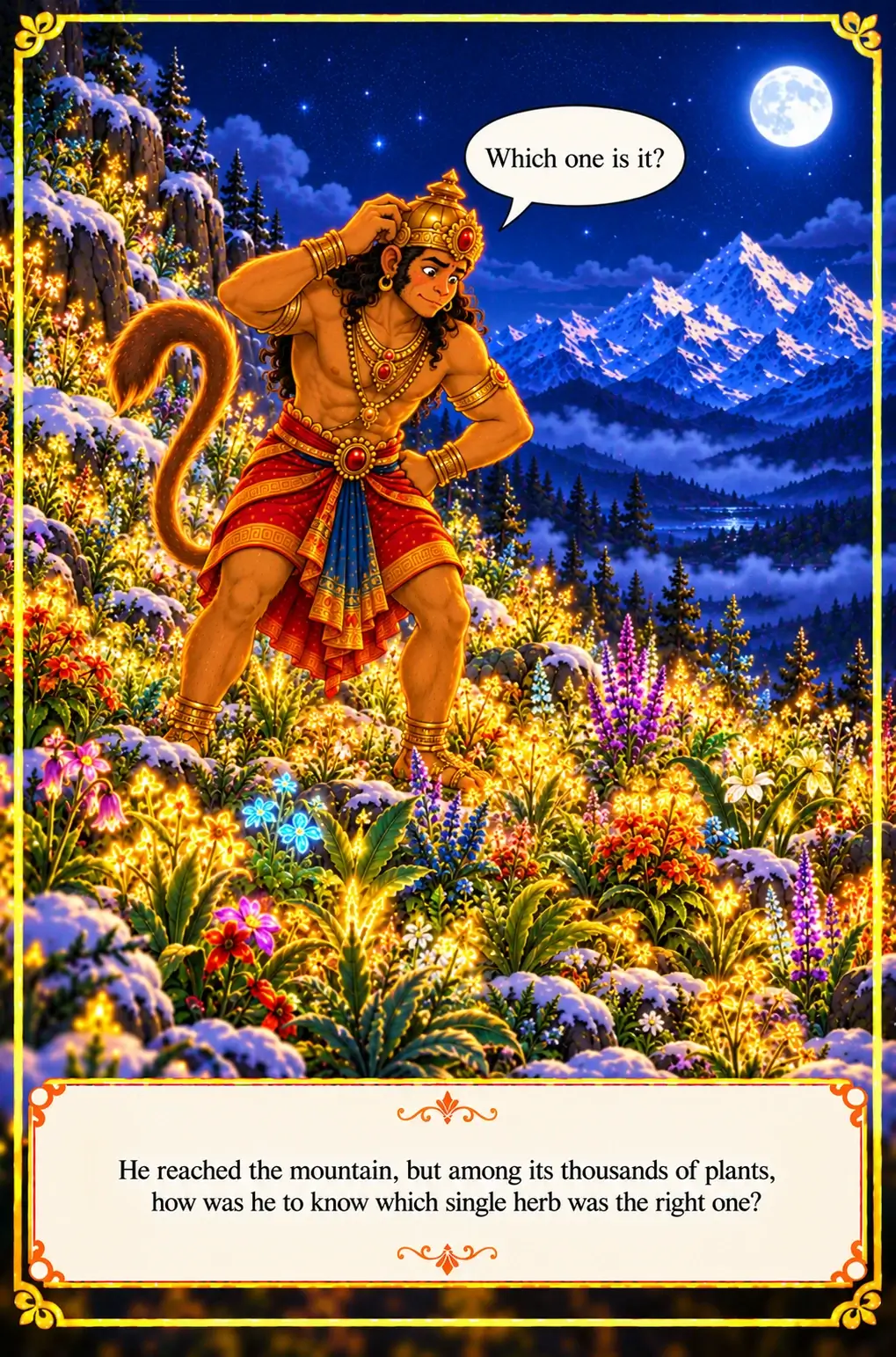
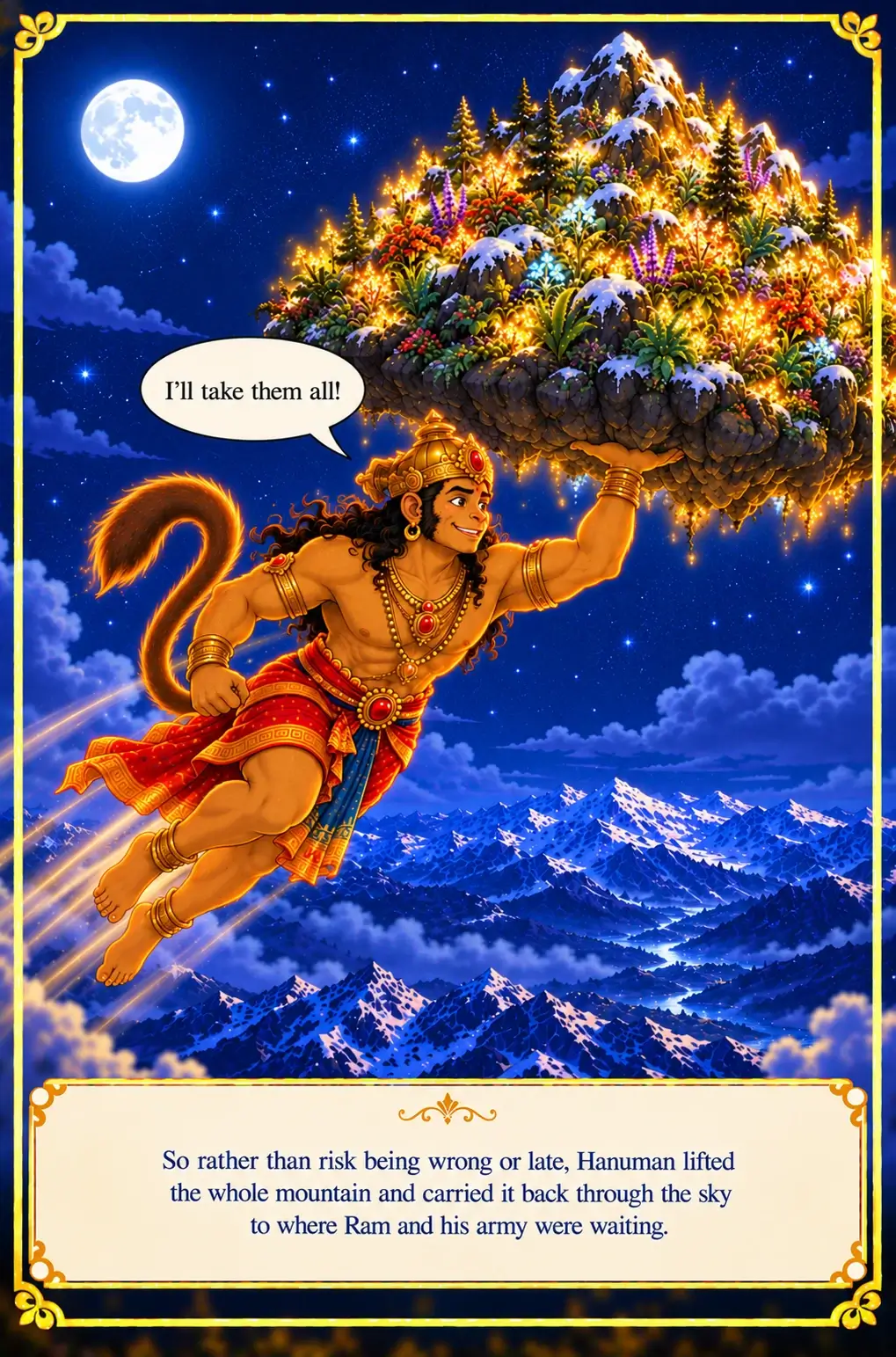
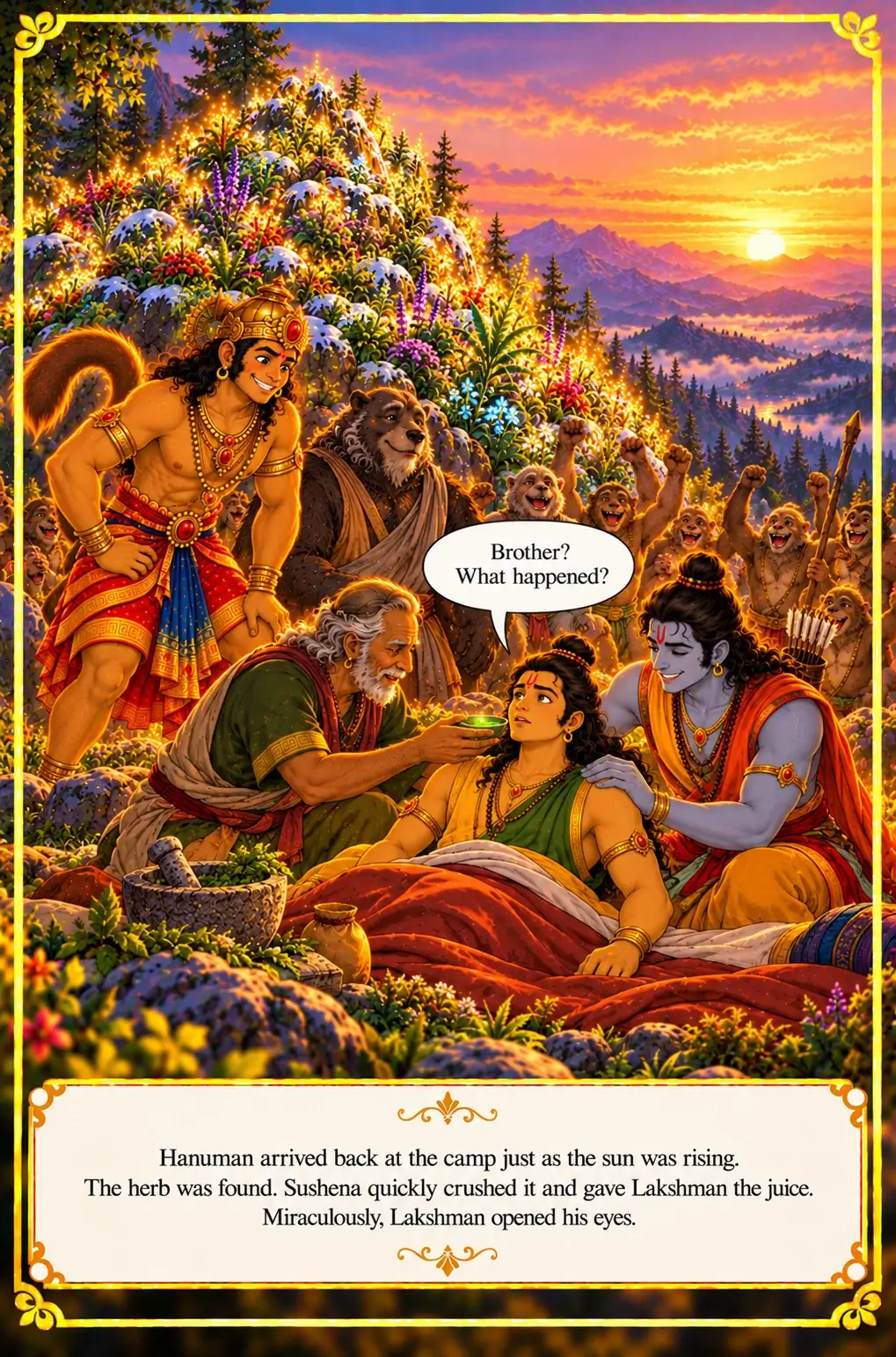
Clever thinking under pressure. When Lakshman is struck down, the wise physician Sushena says only one herb can save him: the Sanjeevani, growing on Dronagiri, far away in the Himalayas. It must arrive by dawn. Hanuman flies there, but finds thousands of glowing plants and no way of knowing which one is right. So he does something wonderfully simple. He lifts the whole mountain. Children laugh at this moment every time, and then they quietly remember it. When you cannot find the answer, sometimes you bring everything and let the experts decide.
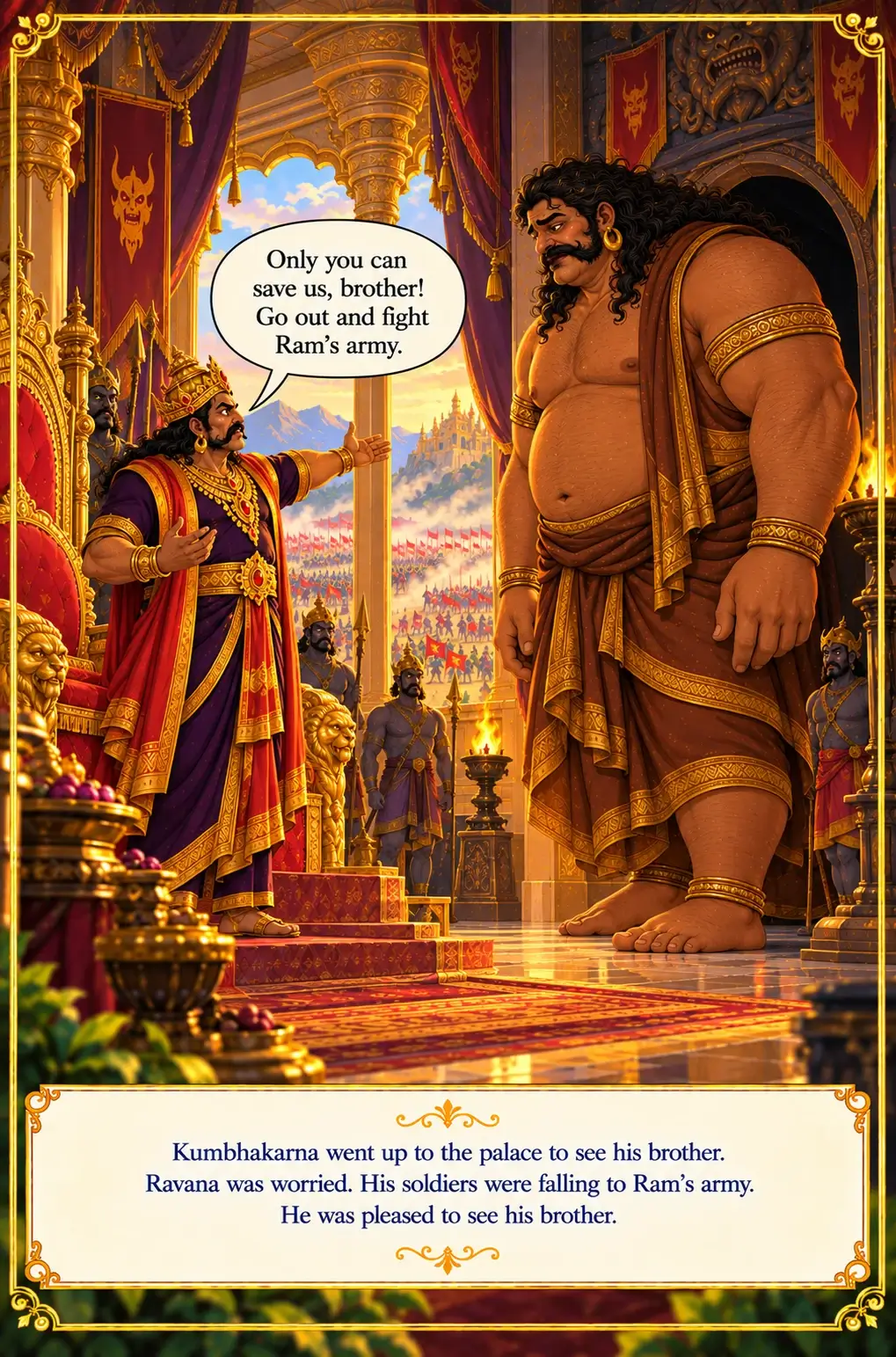
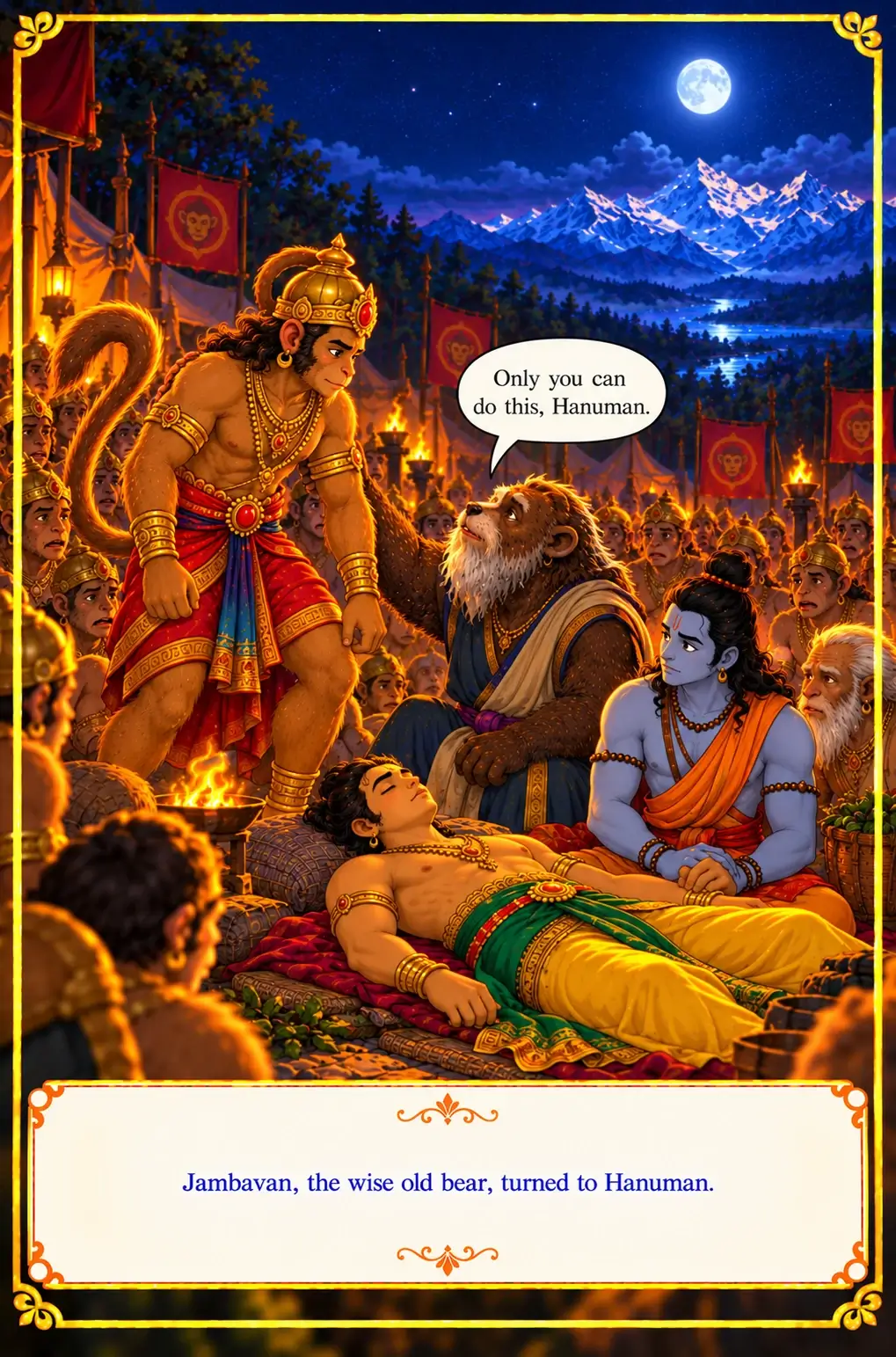
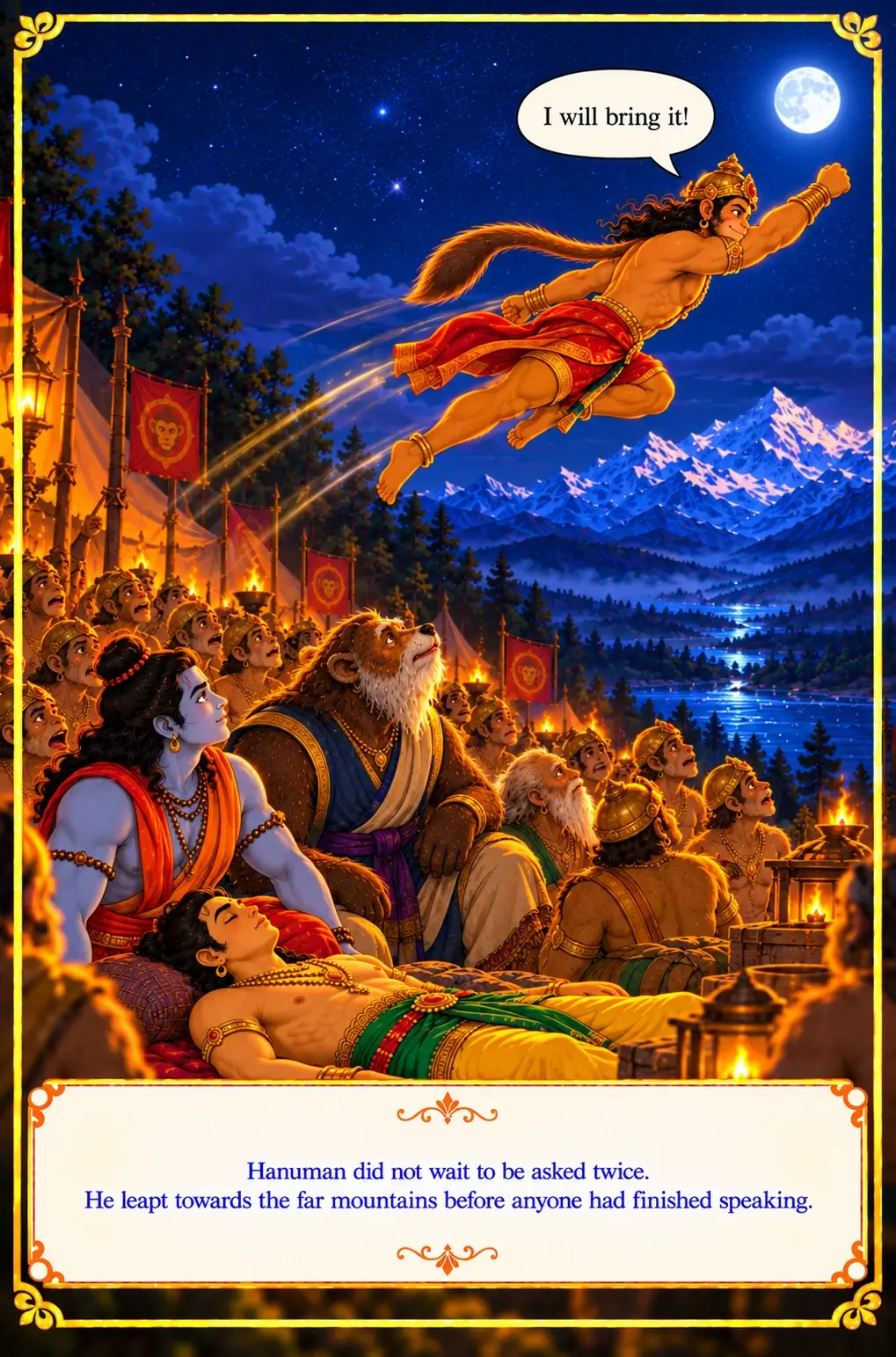
Courage that comes from others. Hanuman does not leap on his own. Jambavan, the wise old bear, turns to him and says, “Only you can do this, Hanuman.” It is a small moment with a big lesson. Sometimes our strength needs someone else to name it out loud. Earlier in the Battle for Sita, Ravana says almost the same words to Kumbhakarna: “Only you can save us.” Two brothers asked for help, in two very different causes. Older children often notice the echo on their own.
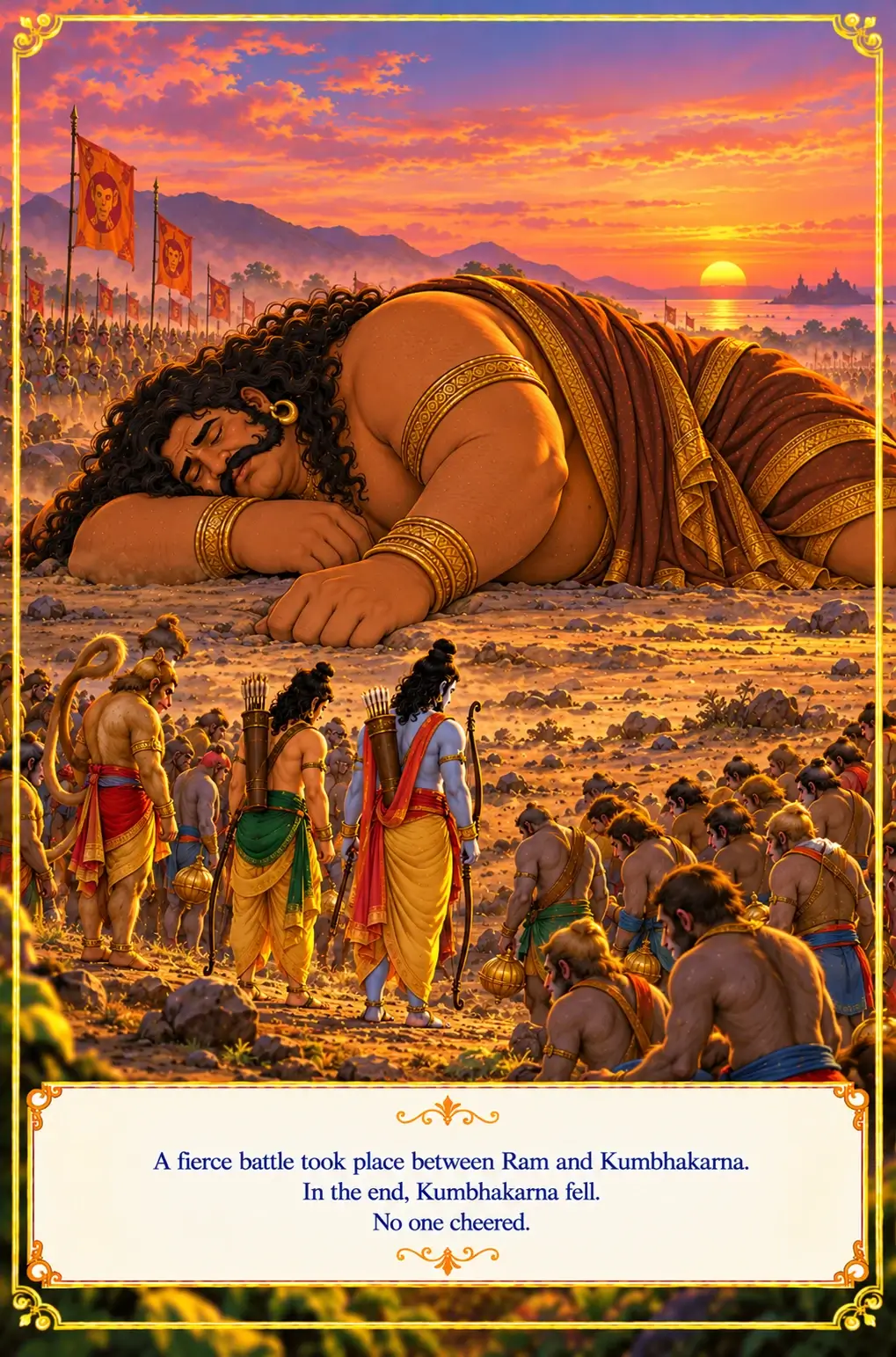
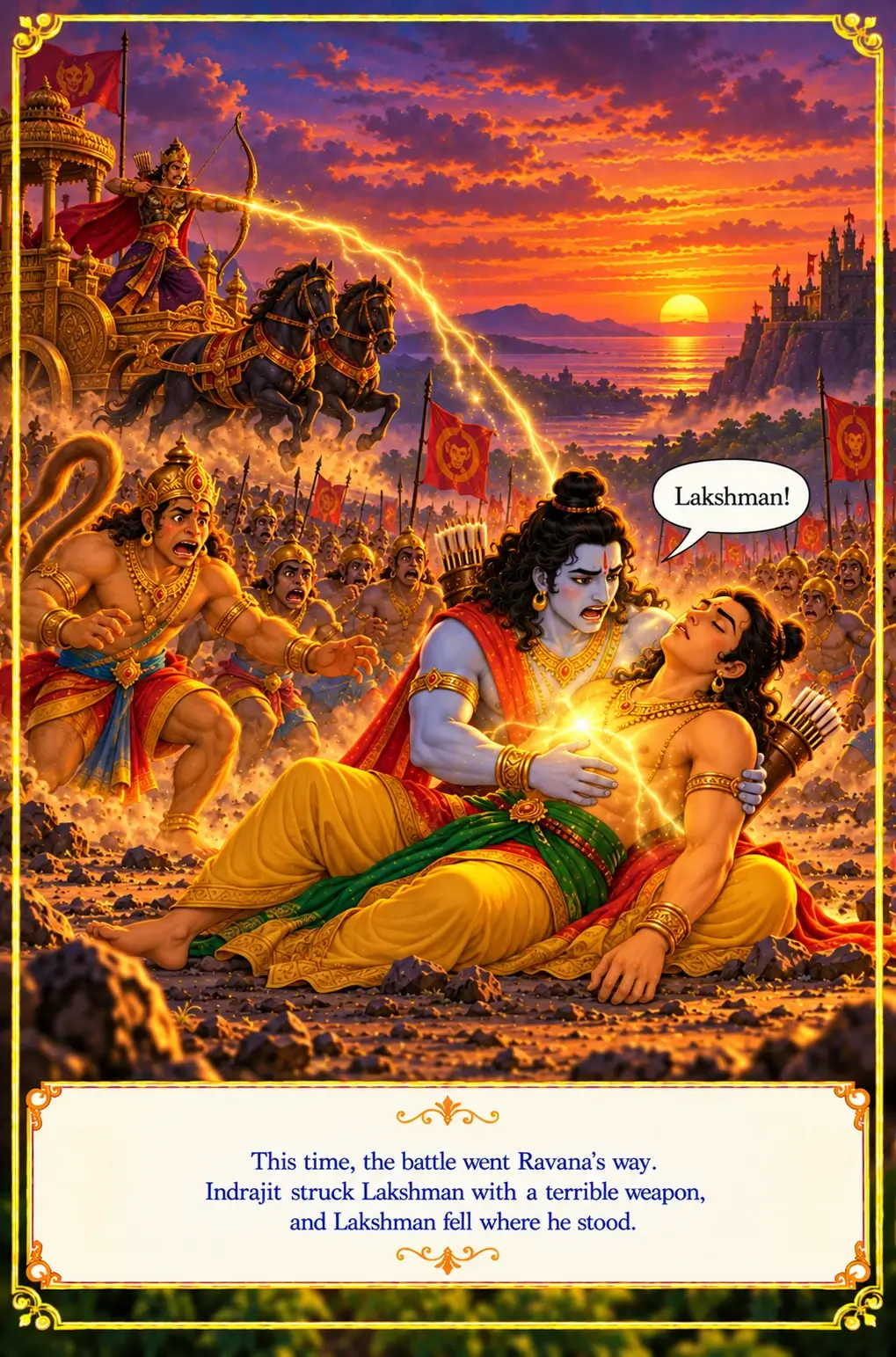
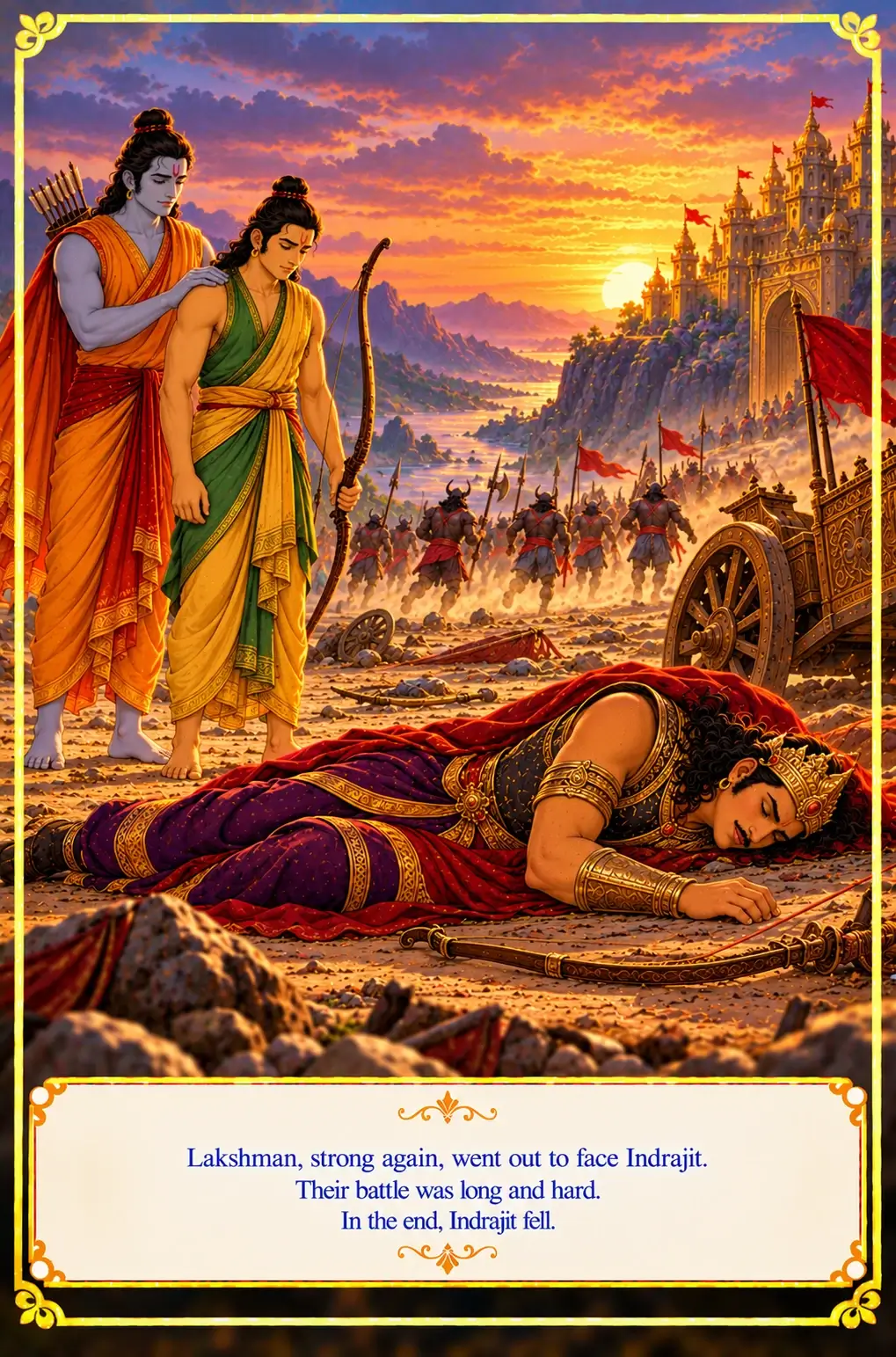
Grief belongs to everyone. When Kumbhakarna falls, nobody cheers. When Indrajit falls, Lakshman lowers his bow and bows his head. Even the people who were right do not celebrate a loss. This is one of the gentlest and most important ideas in Kahani Nani’s retelling of the Battle for Sita: winning is not the same as being happy that someone else has lost.
Discussion Questions for Families
- Kumbhakarna knew Ravana was wrong, but he still stood with him. Do you think he made the right choice? Why or why not?
- Ravana was asked to stop three times. Why do you think it is so hard for some people to say “I was wrong”?
- Hanuman could not tell which herb was the right one, so he carried the whole mountain. Can you think of a time you solved a problem in a clever way?
- Jambavan told Hanuman, “Only you can do this.” Has anyone ever helped you believe you could do something hard?
- Nobody cheered when Kumbhakarna fell. Why do you think that was?
Parent’s Guide: Talking About Loyalty and Doing What Is Right
The Battle for Sita gives children a safe way to explore a big question: what do you do when someone you love is doing something wrong? There is no single answer, and that is the point. Let your child share what they think before you share what you think. You may be surprised.
- Best time to read: bedtime or a quiet weekend afternoon
- Age range: 5 to 9 years
- Reading time: 10 to 12 minutes
- Follow-up: ask “What would you have done if you were Kumbhakarna?” the next morning, once the story has settled
Building Character and Empathy Every Day
- Practise saying sorry. Ravana never could. Model it yourself: “I was wrong about that. I’m sorry.”
- Name a strength out loud. Like Jambavan, tell your child one thing you know they can do, especially before something hard.
- Solve it differently. Pick a small household puzzle and ask, “What would Hanuman do?”
- Be kind in winning. After a game, try a “good game” handshake instead of a victory dance.
- Talk about feelings on both sides. When a story has a villain, ask how their family might feel.
Where We Are in the Ramayan
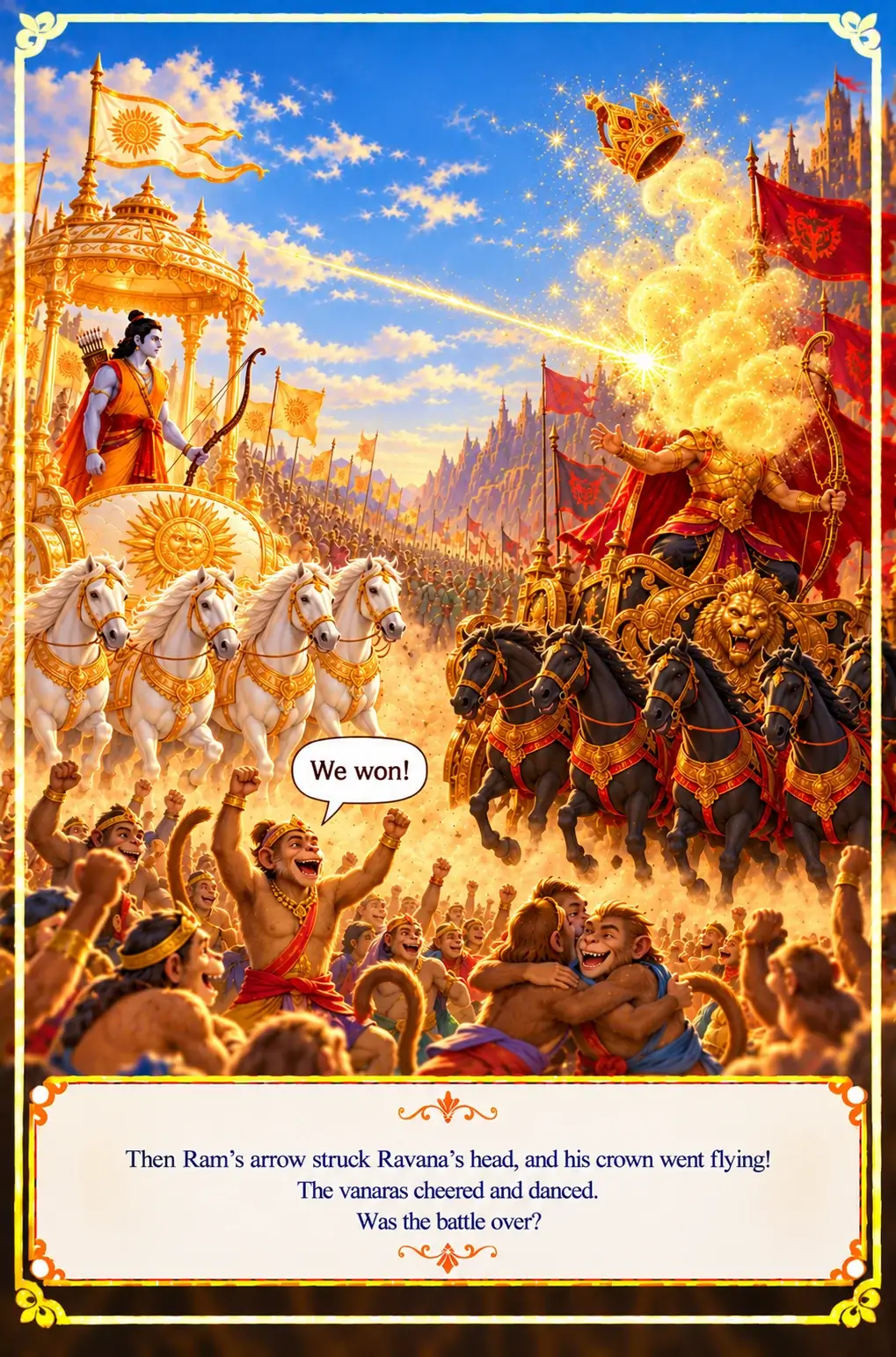
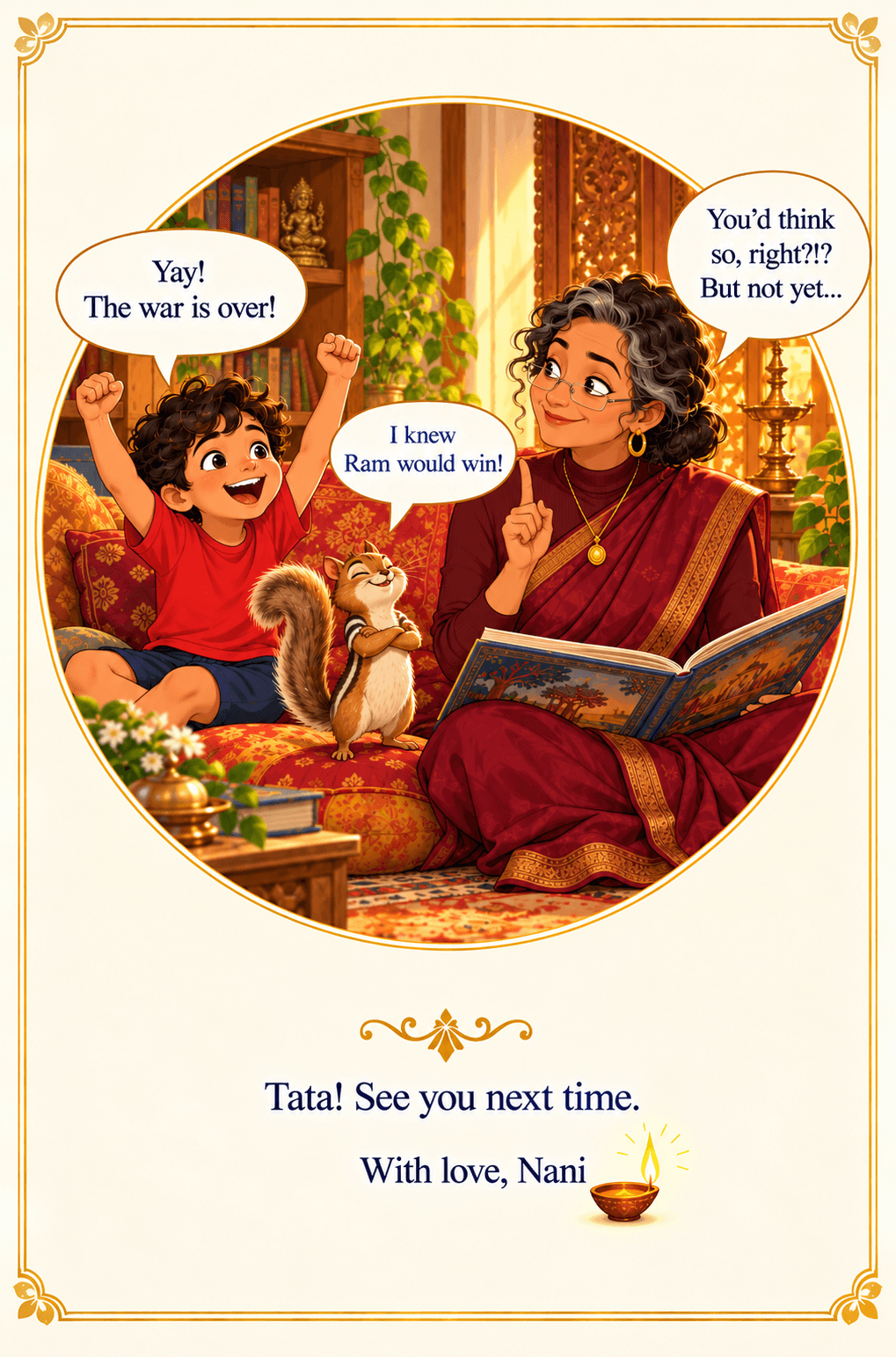
The Battle for Sita is Book 11 of Kahani Nani’s twelve-book Ramayan for kids, released weekly in the lead-up to Diwali. In Book 10, The Road to Lanka, Vibhishan left his brother’s side, the great bridge was built and Ram’s army crossed the ocean. Book 11 ends on a cliffhanger, with Ram’s arrow striking true and the vanaras dancing in celebration. But Nani knows something Krish does not. Ravana has a secret, and it will take one more book to discover it. The final chapter, Book 12, The Lights of Ayodhya, arrives just in time for Diwali.